
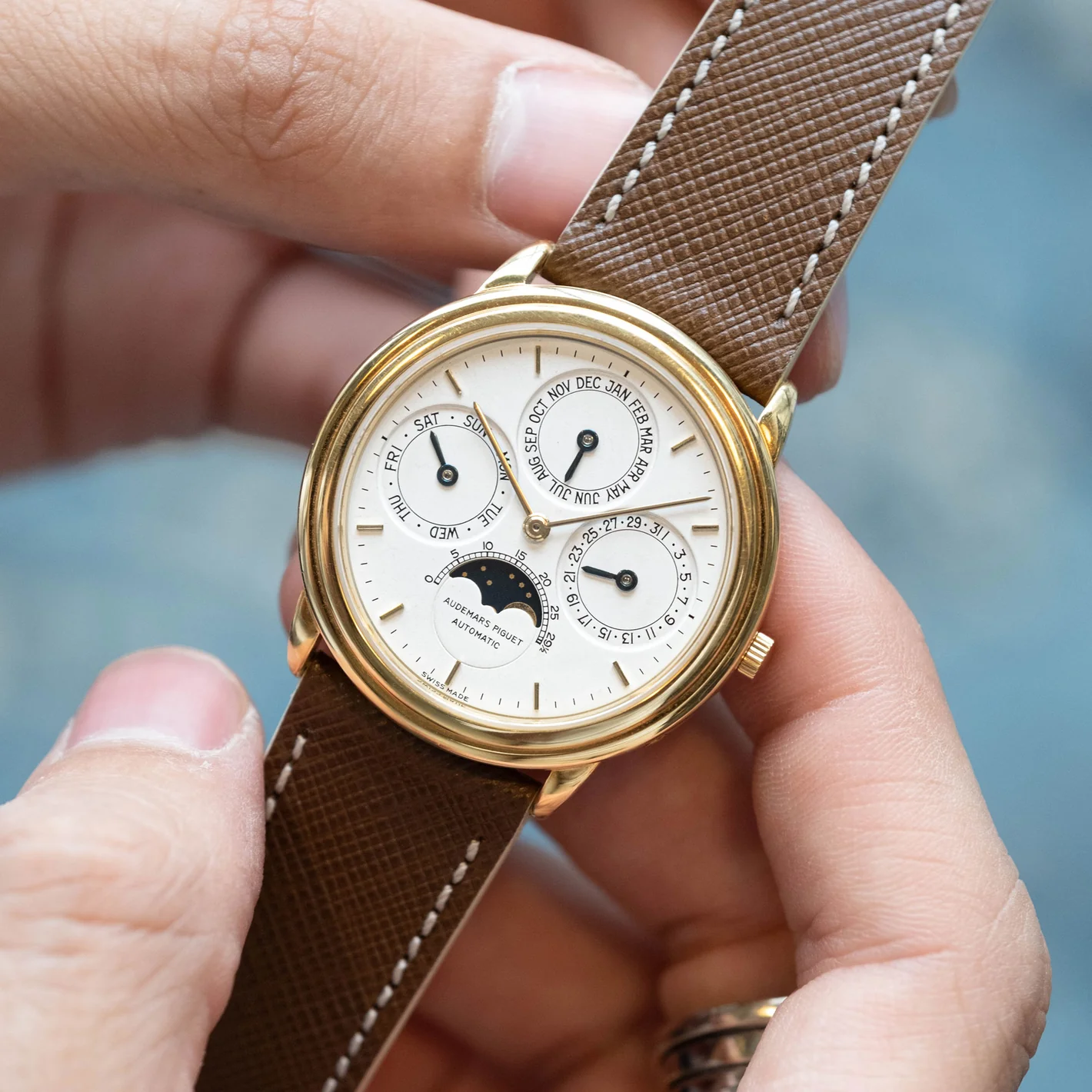
Preserve the complete group
Keep boxes, warranty documents, service invoices, receipts, spare links, straps and loose components with the watch. An old-looking part may be original and relevant to value. Do not discard packaging because it appears worn or unrelated before the watch has been identified.
Store the watch securely and avoid winding or operating it repeatedly if its condition or service history is unknown.
Identify the watch without opening it
Start with the brand, dial wording, caseback, bracelet or clasp and any paperwork. A reference number may appear on a warranty card, service invoice or visible engraving. Do not remove the caseback or bracelet unless the work is performed by someone with the correct tools and experience.
Photographs of the front, sides, caseback, clasp and documents are usually enough for a useful first conversation.
Value the watch as it is
Avoid polishing, replacing parts or commissioning an expensive service before requesting a valuation. Original condition and components can matter, and the cost of work is not always recovered in a sale.
An initial assessment should consider the exact reference, condition, originality, completeness, provenance and current demand—not only the brand name or a family estimate.
Choose a sale route that respects your priorities
Some families prioritise the highest possible private price; others value privacy, a clear timeframe and dealing with one accountable buyer. A direct offer creates a concrete option without requiring you to list the watch publicly or accept the price.
Take time to document the watch and discuss the decision with other relevant family members before ownership changes.
Guide content is general information. A direct-purchase quote is based on the details and photographs you provide. If a material difference is found, we contact you before any change is made.