
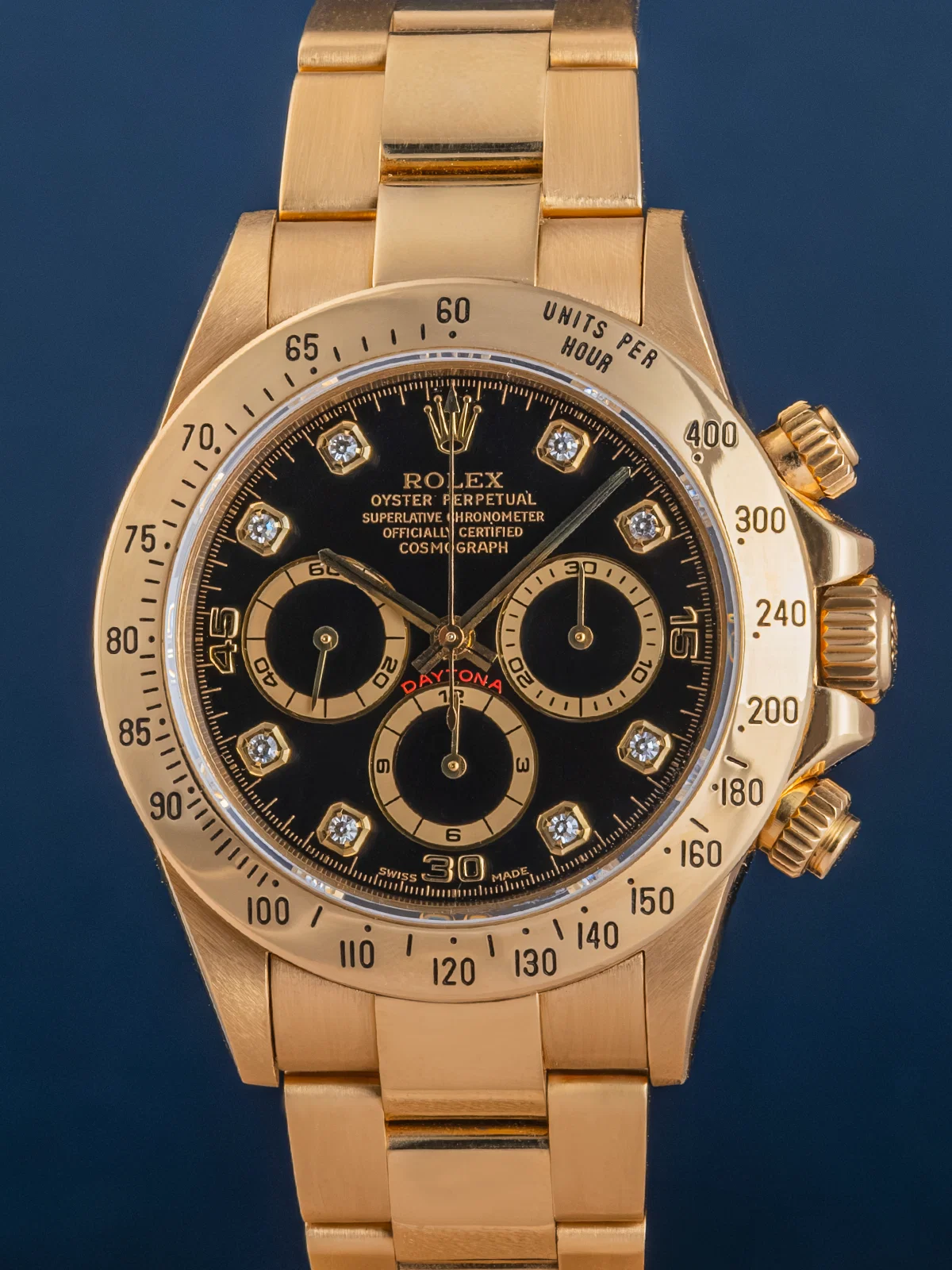
Case and bezel
Sharp case geometry, even surfaces and original finishing can be important, particularly for collectible sports watches. Deep dents, corrosion and heavy polishing can reduce value more than ordinary hairline wear.
Do not attempt home refinishing. Abrasive cloths and improvised polishing can permanently change edges and surface finishes.
Dial, hands and lume
The dial is often the visual identity of a reference. Damage, moisture, refinishing or replacement can materially change desirability. On vintage watches, age-consistent patina may be accepted or valued, while a repainted dial can be a major issue.
Clear photographs should show the dial straight-on and from an angle. Mention marks under the crystal rather than assuming they are on the crystal itself.
Bracelet, clasp and accessories
Bracelet stretch, damaged screws, loose pins, worn clasps and missing links all create practical costs. Photograph the bracelet laid flat, the clasp open and every spare link. For strap watches, include the buckle and any additional manufacturer straps.
Movement and function
State whether the watch winds, sets, runs and whether complications operate. Accuracy, power reserve, water resistance and service needs cannot be confirmed reliably from photographs, so routine functional checks follow acceptance.
Do not repeatedly operate a watch that is making unusual noises or has taken in water. Further use can increase damage.
Describe condition for an accurate quote
Avoid vague grades without evidence. Provide close, well-lit photographs and a short written list of known issues. An accurate description helps the buyer provide the clearest quote from the beginning.
Guide content is general information. A direct-purchase quote is based on the details and photographs you provide. If a material difference is found, we contact you before any change is made.