
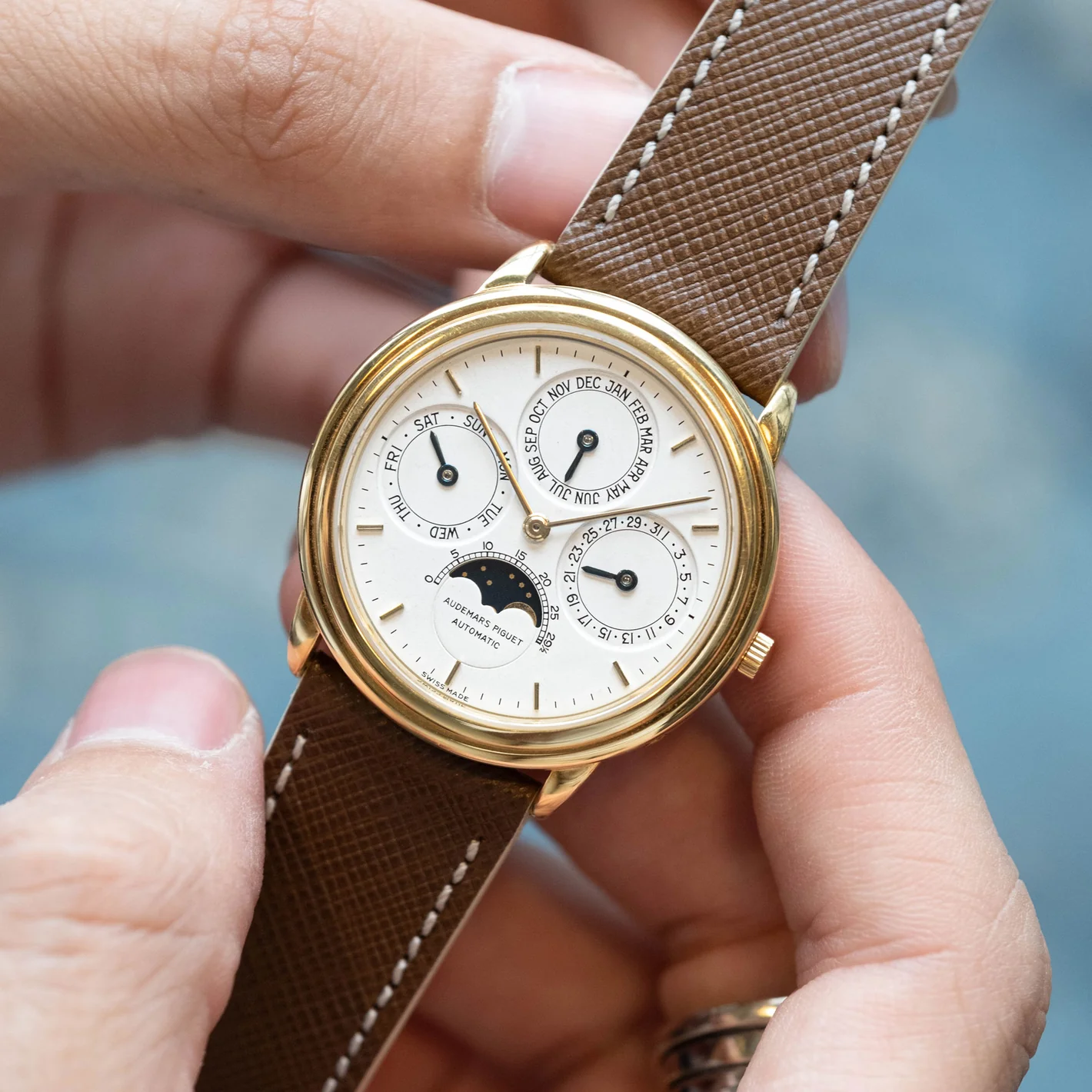
The goal is visibility, not restoration
A clean photograph helps the buyer see the dial, bezel, case and bracelet, but the watch does not need to look new. Dust can be lifted gently with a clean, dry microfibre cloth or soft air blower.
Leave scratches, patina and tarnish visible. Showing the watch honestly helps the buyer provide the most accurate quote from the beginning.
Avoid polishing and abrasive products
Metal polish, jewellery cloths, toothpaste and cutting compounds remove material or alter brushed and polished surfaces. They can soften edges, blur engravings and reduce originality.
Do not use a polishing machine or attempt to recreate factory finishing. A buyer may prefer the untouched case and can decide later whether professional refinishing is appropriate.
Be cautious with water and chemicals
A depth rating from when the watch was new does not prove that its seals remain effective. Avoid soaking or rinsing an untested watch, especially if it is vintage, damaged or has an unknown service history.
Household cleaners, alcohol and solvents can affect gaskets, coatings, adhesives and leather or rubber straps. If residue cannot be removed safely, photograph it and mention it.
Prepare the complete submission
Use indirect daylight and take sharp images of the dial, sides, caseback, crown, bracelet or strap, clasp and any damage. Wipe fingerprints from boxes or cards only where that can be done without harming them.
A truthful as-is presentation is more useful than cosmetic preparation. Clear photographs let the buyer assess current condition before handover, with routine checks completed after acceptance.
Guide content is general information. A direct-purchase quote is based on the details and photographs you provide. If a material difference is found, we contact you before any change is made.